If you are looking at a commercial property in Franklin or Cool Springs, the wrong first impression can cost you. A polished building, a recognizable address, or a strong asking rent can make a deal look better than it really is. The good news is that you can evaluate these properties with a clearer lens by focusing on the numbers, the site, and the local rules that actually shape long-term value. Let’s dive in.
Start With The Franklin Demand Story
Franklin and Williamson County offer a strong backdrop for commercial real estate, but that does not mean every deal is a good one. Franklin’s estimated population was 89,142 in 2024, and Williamson County’s estimated population was 269,136. Median household income was also high, at $119,528 in Franklin and $135,594 in Williamson County.
Those numbers matter because they point to a large and affluent trade area. Franklin also recorded $4.05 billion in retail sales in 2022, and Williamson County’s bachelor’s degree attainment reached 62.7% in 2020-2024. For office, retail, and mixed-use assets, that can support a broad tenant base, including professional, medical, service, and destination retail users.
Cool Springs adds another layer to that story. The City of Franklin describes it as a business, dining, and shopping hub, which makes it more than a spillover area. That means you should evaluate the exact location within Cool Springs instead of assuming every address performs the same.
Focus On The Specific Node
In Franklin and Cool Springs, the strongest acquisitions usually pair stable income with strong location fundamentals. You want a property that has visibility, tenant demand, and a submarket that can absorb space again if a tenant leaves. That is often what separates a durable deal from a short-term story.
This is especially important for retail and mixed-use properties. Household income, retail spending, and daytime traffic all affect whether a property can hold rents through changing market conditions. A building in the right node can stay competitive even when leasing gets tougher.
Evaluate Traffic And Access First
One of the fastest ways to improve your deal screening is to study traffic and access before you get attached to the asset. In this market, frontage and circulation often matter as much as the building itself. The site that captures traffic well can outperform a prettier property with weaker access.
TDOT’s Annual Average Daily Traffic maps are a strong starting point because they use 24-hour, two-direction counts adjusted for vehicle type and seasonal factors. In the Franklin and Brentwood core, I-65 carries some of the county’s heaviest volumes, including stations at 153,149 AADT and 138,687 AADT. Nearby counts can differ sharply, including one station at 13,323 AADT, so the exact frontage matters.
A buyer should ask a few practical questions right away:
- How easy is it to enter and exit the site?
- Are there medians or turn restrictions that limit access?
- Does the property rely on one driveway?
- Is the traffic count on the true arterial or just a feeder road?
- Can the site actually capture the passing traffic?
A strong address does not always mean strong functionality. In an auto-oriented submarket like Cool Springs, clean ingress and egress still carry major weight for office and retail value.
Watch Road Projects Closely
Infrastructure can improve a deal over time, but it can also create near-term risk. Franklin’s planning documents show active transportation work in and around Cool Springs. That makes future road improvements an important part of underwriting.
Connect Franklin identifies Cool Springs Boulevard as a key corridor and calls for widening it from Mallory Lane to Carothers Parkway from 4 to 10 lanes, with an estimated cost of $20 million. The same plan calls for widening East McEwen Drive from Cool Springs Boulevard to Wilson Pike from 2 to 4 lanes, with an estimated cost of $26.4 million. These projects can improve circulation and long-run access, but they may also bring construction disruption, temporary access changes, and right-of-way pressure.
Franklin is also continuing to invest in sidewalks, multi-use paths, and ADA improvements, including projects tied to McEwen Drive. For mixed-use and retail properties, future walkability can affect tenant demand and eventual resale value. When you evaluate a deal, it helps to think about both today’s traffic flow and tomorrow’s street pattern.
Underwrite The Income, Not The Asking Rent
A commercial deal should be judged by its income stream, not just the rent headline. A building may look attractive on paper, but the real question is whether the income is durable. That means digging into tenant quality, lease terms, and near-term costs.
A creditworthy tenant is generally one with strong financial statements and operating history. For you as a buyer, that means looking beyond occupancy. You need to know who the tenant is, how stable the business appears to be, how much lease term remains, and whether the tenant mix can hold up if local competition changes.
This is especially important in Franklin and Cool Springs because demand is strong, but not unlimited. If a vacancy happens, releasing space can still take time, especially if the suite layout is highly specialized. A stable roster with practical, reusable space often deserves more confidence than a flashy rent roll with hidden fragility.
Compare Lease Structure Carefully
Two properties can show the same face rent and still have very different value. The reason is simple: lease structure changes risk. If one property leaves the owner exposed to taxes, insurance, common area maintenance, or repairs, the net income may be weaker than it first appears.
Gross and net lease structures should be reviewed line by line. In triple-net arrangements, tenants often pay taxes, insurance, CAM, and sometimes repairs and maintenance. That can create a more predictable income stream, but you still need to verify the actual lease language.
For retail and mixed-use assets, pay close attention to:
- CAM caps
- Reimbursement terms
- Expense pass-throughs
- Repair obligations
- Exclusives
- Co-tenancy clauses
The key is to normalize the income before comparing deals. A lower asking cap rate on a better structured lease can be safer than a higher cap rate that leaves you with more expense exposure.
Normalize NOI Before Pricing The Deal
Net operating income is the income left after operating expenses and before taxes and financing costs. Cap rate is the first-year NOI divided by purchase price. Because of that, NOI normalization should sit at the center of your analysis.
Do not rely on a seller’s pro forma without pressure-testing it. Review vacancy assumptions, lease concessions, recoverable expenses, and near-term capital needs. If the property needs tenant improvements, parking work, façade upgrades, or re-tenanting costs to stay competitive, those costs need to be reflected in your pricing.
This is often where disciplined buyers gain an edge. The best deals are not always the ones with the highest advertised income. They are the ones where the income remains strong after you adjust for reality.
Verify Property Taxes Locally
In Tennessee, property taxes are set locally, and countywide reappraisal happens on a 4-, 5-, or 6-year cycle. That means tax assumptions should be verified from the current parcel bill and local assessment data. Using an old comp or an outdated underwriting file can lead to a bad estimate.
This matters even more in NNN or single-tenant retail deals. If taxes rise, that can increase the tenant’s occupancy cost and affect renewal decisions later. A deal that looks stable today may feel different once you account for tax changes over the full hold period.
Confirm Zoning And Jurisdiction Early
A commercial property’s value is tied not only to what it is today, but also to what the code allows tomorrow. Franklin’s zoning ordinance includes districts such as CC, DD, RC4, RC6, RC12, GO, LI, and HI. It also distinguishes building types that matter to investors, including commercial or mixed-use buildings, large-scale office buildings, large-scale retail buildings, and flex buildings.
The CC district is intended for mixed-use centers or corridors with pedestrian-oriented development. Other districts, including RC4, RC6, RC12, GO, and LI, can support higher-intensity commercial patterns. If you are evaluating a repositioning play, redevelopment angle, or future exit strategy, those distinctions matter.
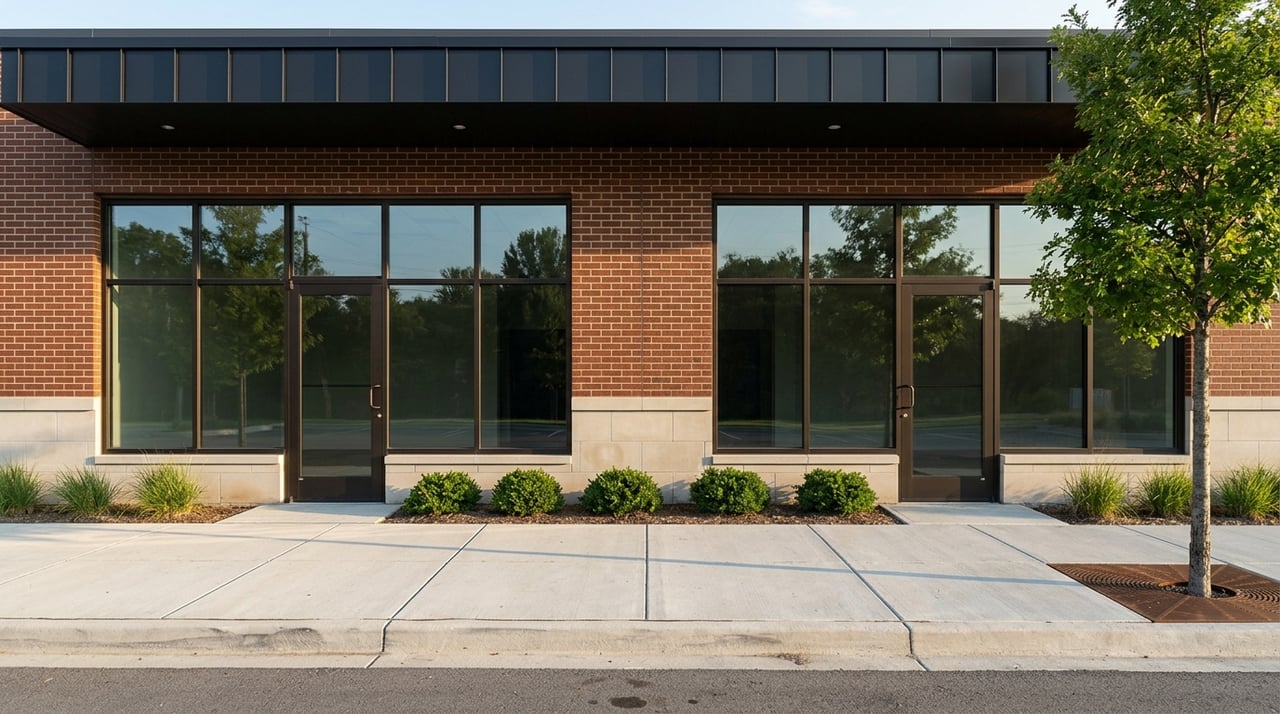
Franklin also applies design and frontage rules that can affect leasing and redevelopment. In commercial and mixed-use building types, the front façade must face the public street, private street, or internal drive in that order of priority. Retail storefronts are also expected to include substantial glazing and pedestrian-oriented design features.
That means repositioning is not just a cost question. It is also a code question. A renovation plan that works in theory may become much more expensive if frontage, façade, or use-mix standards apply.
Do Not Assume The Property Is In The Same Jurisdiction
One of the simplest ways to avoid a bad surprise is to confirm whether the property is inside Franklin city limits or in unincorporated Williamson County. A Cool Springs-area address can sit under different rules depending on jurisdiction. Mailing address alone is not enough.
Franklin handles zoning administration and land-use review for city properties, while Williamson County provides zoning guidance for county parcels. That difference can affect use permissions, development review, and the path for any future changes. Early diligence here can save time, money, and frustration.
Use A Practical Deal Filter
Before you make an offer, you should be able to answer a short list of questions clearly. If the answers are vague, the deal may be priced on a story instead of a solid underwriting case.
Use this screening list:
- Is the property in Franklin or unincorporated Williamson County?
- Is the current use permitted by right?
- What is the exact traffic count station for the frontage?
- What road projects are planned nearby?
- How strong is the tenant credit?
- How are taxes, insurance, CAM, and repairs handled in the lease?
- What capital improvements will be needed to keep the asset competitive?
- How realistic is the re-leasing story if a tenant leaves?
When you evaluate a commercial deal in Franklin or Cool Springs this way, you move from surface-level interest to disciplined decision-making. That is usually where better outcomes begin.
If you are weighing a commercial acquisition, sale, or repositioning strategy in Williamson County, principal-level local insight can make a meaningful difference. Greg Sanford provides direct, boutique guidance for complex commercial and land-related decisions with a deep understanding of local market dynamics, zoning considerations, and long-term value.
FAQs
What should you review first in a Franklin commercial deal?
- Start with the site’s traffic, access, and exact location within the submarket, then move to tenant quality, lease structure, and local zoning.
Why does access matter so much for Cool Springs commercial property?
- Cool Springs remains largely auto-oriented, so ingress, egress, turn movements, and road positioning can have a major effect on tenant performance and property value.
How do you compare two commercial properties with similar rents in Franklin?
- Compare normalized NOI, tenant credit, lease structure, recoverable expenses, tax exposure, and expected capital needs rather than relying on face rent alone.
Why should you verify zoning for a Williamson County commercial property early?
- The rules can differ depending on whether the property is inside Franklin city limits or in unincorporated Williamson County, which can affect current use and future plans.
What local trends can affect long-term value in Cool Springs?
- Planned road widening, circulation changes, sidewalk and ADA investments, and Franklin’s broader planning approach can all influence access, tenant demand, and exit value over time.